International Telecommunication Discussion

  • Thread starter Thread starter unnecessary
  • Start date Start date
  • Replies Replies 7
  • Views Views 1,657
Messages
457
Location
India Bharat
ISP
Excitel, Vi, BSNL, Airtel & Jio
Wish? : XGS-PON
Let's discuss International Telecommunication and a lot of stuff here without making other threads off topic starting with this post :
 
With the context of this post : Excitel Fiber Broadband Experience in Delhi NCR

@Anurag Bhatia Thank you so much for your meaningful insights. We, the members of this forum always have conversations on things but your answer truly shed light on our discussions. I have this link from one of their ISP's site which says the network is live and they even have 3 videos at the bottom of this page :

Yes, the Nokia test you said above is true for their largest ISP. Here I found one link to their official blogpost : WorldLink is upgrading FTTH network with the new 10 Gbps technology - WorldLink Communications Ltd.

Also, they all seem to have almost same base plans of 125-200 Mbps. But as you said higher base plan only isn't useful and I agree on that.

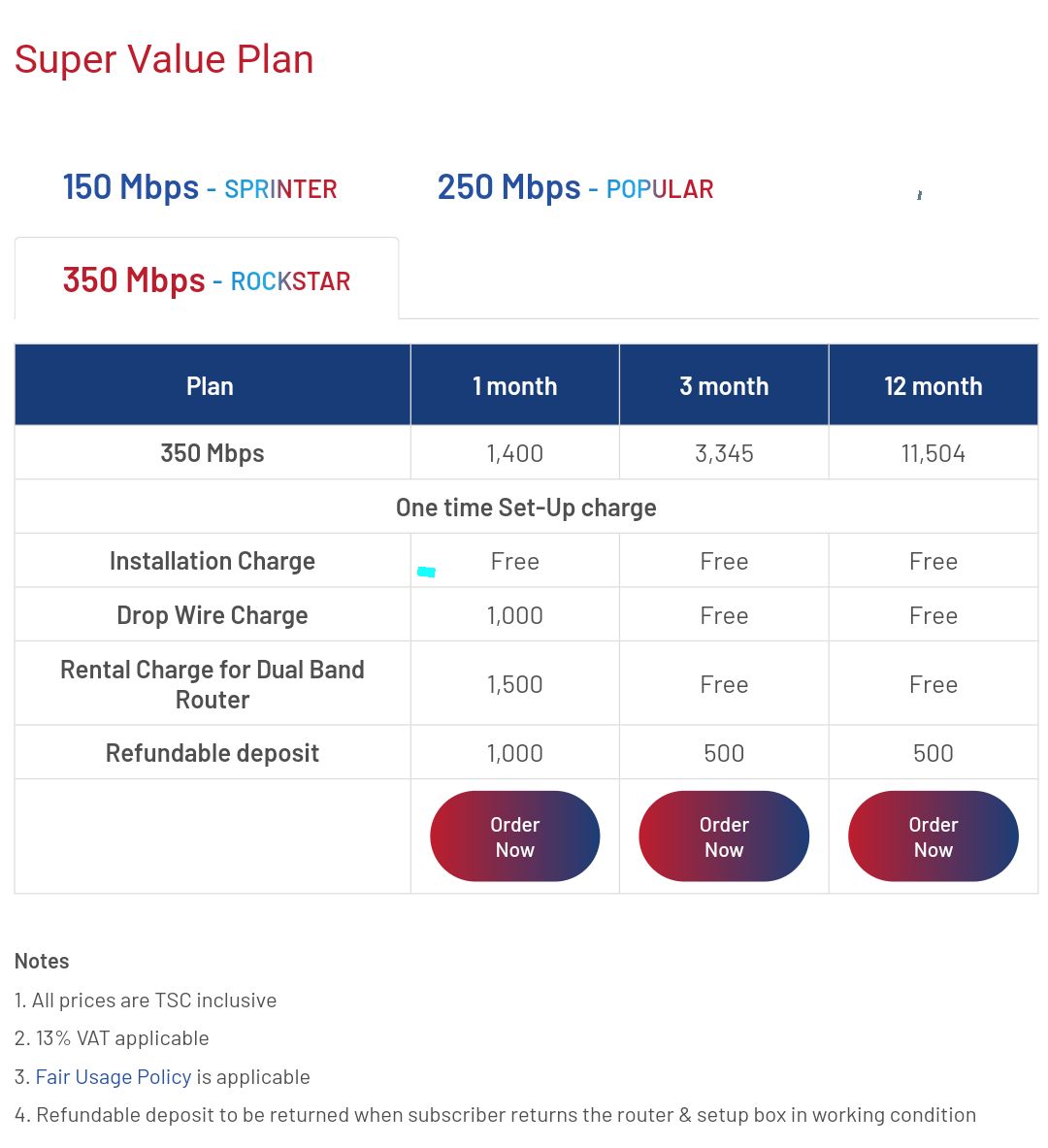
Also, Just like our Ambani Ji the Richest billionaire there also seems to have an internet company and here are their plans :
k8ySmQA.jpg


The plans really look attractive though. Converting 12 months 350 Mbps to inr is ₹7163. Which is not higher than ours. Still impressive to see nonetheless.

I checked out Bangladesh plans as well but they don't seem to match ours or even come close to us. Neither in terms of speeds or prices. They are still way too overpriced.
 
@Anurag Bhatia Hi, read your blog on CANI. I want to know, how do people manage to splice the fiber deep under the sea? Are there joints in Fiber cable from Chennai to Andaman Nicobar Islands? If yes, then for 2300kms, there must be so many joints, so signal loss happens?
 
They have amplifiers in between the fibers under the sea. The cable not only carries fiber cable but copper one with current as well. I'm not sure about the splicing thing I guess they have some machines to do that for places which doesn't already have it. Rest I leave for the experts.
 
I do not know why but Excitel is not blocking HTTPS connection to their Huawei BNGs.
If you open 205.254.184.1, 205.254.161.1, 205.254.181.1, 205.254.187.1 it will open up their Huawei BNG web interface.
@Anurag Bhatia Bruteforce can break this right?

 
I can only access 2nd one from those 4 (205.254.161.1). How's this possible?
@Lolita_Magnum 🤔

VJxNHcN.jpg


@Skeeter My BNG is also Huawei?

@Anurag Bhatia I only followed you on X since a long time but today after Skeeter mentioned I read 4-5 articles of yours from Andaman Submarine Cable To Telcos Asking OTT's to Pay to Google Cloud Standard Vs Premium Tier and I gotta say I found the perfect blog site for all my deep internet insights hunger. Thanks a lot for posting all that in depth stuff. I was about to make a video on Telcos vs OTT topic and your information will really help me a lot. Thank you so much for it and I will surely let people know about your blogs. They're amazing. I'm going to sleep now because it's already 4 AM but will surely binge read all my favourites after I wake up.
 
Last edited:
@Anurag Bhatia Hi, read your blog on CANI. I want to know, how do people manage to splice the fiber deep under the sea? Are there joints in Fiber cable from Chennai to Andaman Nicobar Islands? If yes, then for 2300kms, there must be so many joints, so signal loss happens?
Hello @Skeeter - good to hear you read that post. As @unnecessary pointed these cables have fibre + copper conductor + lot's of heavy steel rod like shielding. There are amplifiers, lot's them - typically at every 80-100Km which are powered by these electric lines. The cables are connected to amplifiers on ground itself during roll out and splicing is avoided unless it's a repair. During repair cables are pulled pull on the repair ship. It's a physically an effort to remove outer shields and thus done at the ship itself. You can see the actual process in this excellent documentary here. Watch it from 37:35 for next 5 mins and you will see the actual repair including splicing (around 40th min).


I do not know why but Excitel is not blocking HTTPS connection to their Huawei BNGs.
If you open 205.254.184.1, 205.254.161.1, 205.254.181.1, 205.254.187.1 it will open up their Huawei BNG web interface.
@Anurag Bhatia Bruteforce can break this right?

Seems like a switch. Unsure if it's OLT's management interface. Ideally it should not be reachable. It's lack of firewall. I noticed PPPoE gateway serving me also has SSH as well as BGP TCP 179 open.

Unsure if or not bruteforce would work here. Device might have some sort of bruteforce protection built in like locking login after 10-20 wrong tries. It's funny that their CPEs have captcha built in (to avoid brute force).


@Anurag Bhatia I only followed you on X since a long time but today after Skeeter mentioned I read 4-5 articles of yours from Andaman Submarine Cable To Telcos Asking OTT's to Pay to Google Cloud Standard Vs Premium Tier and I gotta say I found the perfect blog site for all my deep internet insights hunger. Thanks a lot for posting all that in depth stuff. I was about to make a video on Telcos vs OTT topic and your information will really help me a lot. Thank you so much for it and I will surely let people know about your blogs. They're amazing. I'm going to sleep now because it's already 4 AM but will surely binge read all my favourites after I wake up.
Good to hear that @unnecessary. I find the whole telcos Vs OTT debate so crazy and mainstream media completely ignoring massive density of CDN caches inside various networks. Please also checkout my friend Rudolf van der Berg who is doing some extensive work on this. You might have seen his talk from my post on that topic here. His insights on access capacity, CDNs and more taken from reading Vodafone report was fascinating.

His post on that on APNIC blog here.

The specific part:
Vodaphone has reported to its investors that while network traffic volumes have increased significantly over the past 4 years, the level of capital investment has remained relatively steady as the cost per delivered Gb has fallen at a similar rate to the increase in traffic volume (Figure2).

Not only does this financial analysis contradict the assumption that increased traffic volumes necessarily impose increased capex costs on the carrier, the calls for the adoption of a sender pays inter-provider settlement regime along similar lines to the old inter-telco settlements strike a highly discordant note.


Do you share your video when you post it!
 
Back