Why are local broadband providers often cheaper than major players like Jio and Airtel?

  • Thread starter Thread starter Netmagic
  • Start date Start date
  • Replies Replies 9
  • Views Views 196
Messages
131
Location
KOLKATA
ISP
Wired - AS9829 | Not using AS55836, AS132115, AS142451
Mobile - Chotel (Primary) , VI 4G
In my small office setup, I use two broadband connections:

  • JioFiber Prepaid: 30 Mbps @ ₹472/month (incl. tax)
  • AKD Broadband (Kolkata Local ISP): 80 Mbps @ ₹576/month (incl. tax)

Now, if I go for AKD’s Q3 100 Mbps plan, the cost comes down to ₹499/month (tax included) when paying quarterly. They also offer attractive long-term deals like "Pay for 6 months, get 4 months free."


In contrast, Jio charges ₹825/month for 100 Mbps, and there’s no such long-term benefit like AKD’s.


So my question is:
Why are major providers like Jio, Airtel, and BSNL charging significantly more for similar speeds, especially when local ISPs offer better deals and added benefits?
Is it due to branding, wider coverage, or something else?


Looking forward to hearing your insights.
 
If you are in Kolkata, try for Alliance Broadband. They provide 140mbps for 500 (incl tax) if you pay for 6 months
 
they dont have enough backhaul to provide higher speeds at the same price without choking the network

My IBF friend from kolkata pays 1500rs for a 300mbps Airtel Fiber connection and recently he noticed that he wasn't getting the promised speeds ,instead the speeds kept fluctuating with a max speeds of 230mbps down and 170mbps upload

he's probably the only person who has a 300mbps connection and hence airtel didn't have enough backhaul ready and now suffers from network choking
 
I'd say Jio, Airtel or any other major brand has to implement the tech first or upgrade infrastructure at scale.

Now to do all this they need equipments in bulk, a lot of people and paperwork at various level all of which are intensive stuff.

Local broadband players take a share of this bandwidth capability and just distribute it on local level. They pay either per user (percent of monthly recharge) or total bandwidth allocated (They pay rental kinda lumpsum).

Now a local broadband will hire 4-10 technicians or staff. Sometimes just 2-3 people manage around 100-150 customers, If implemented properly it is manageable. Since it is a setup and forget thing unless something goes wrong.
Also sometimes small scale local players don't pay proper taxes, deal in cash and make margins on routers or wiring. Whereas major ISPs are ofcourse audited, they have to provide as well as have good quality equipments in the backend which are extremely costly.

Just search for price of OLT, 40gbps sfp, QSFP fiber patch cord etc. Local players may just deploy a 60k or 1.5lakh Syrotech OLT with 10Gbps sfp and split connections until every customer starts complaining about speed, ping etc before upgrading.

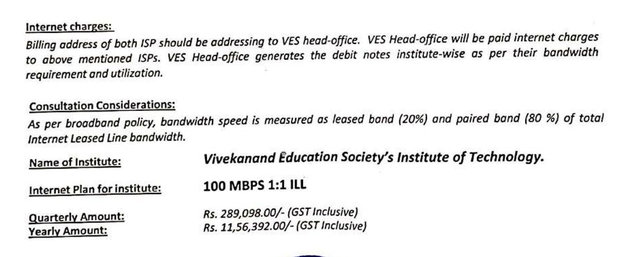
Major internet providers also a lot from leased line or business users.

This is what my college pays

Screenshot-2025-07-15-231355.png


Imagine what corporate or offices might be paying who need more bandwidth. All this income goes into R&D, hiring executives with dream packages :) (It is my placement season wish me luck <3 ) and much more operational cost.

Some of my rough thoughts. :) Please do give more insights
 
i used two local isp's - netplus and excitel. Never had issues related to speed drops or fluctuations. Ping and stability is better than airtel and jio in both cases.

It depends on local level employees if they are pro-active in fixing the issues or not. but yes if something is wrong with routing level then its hard for them to fix it quickly.
 
Back