Chromium Blog: Trustworthy Chrome Extensions, by default
i am on beta build and it seems that the update has already broken a few extensions for me.
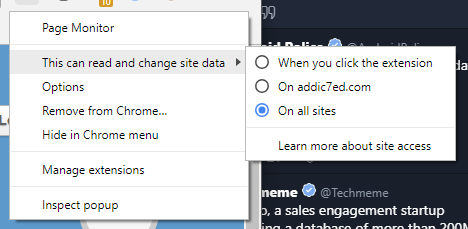
Beginning in Chrome 70, users will have the choice to restrict extension host access to a custom list of sites, or to configure extensions to require a click to gain access to the current page.
While host permissions have enabled thousands of powerful and creative extension use cases, they have also led to a broad range of misuse - both malicious and unintentional - because they allow extensions to automatically read and change data on websites. Our aim is to improve user transparency and control over when extensions are able to access site data. In subsequent milestones, we’ll continue to optimize the user experience toward this goal while improving usability. If your extension requests host permissions, we encourage you to review our transition guide and begin testing as soon as possible.
Going forward, extensions that request powerful permissions will be subject to additional compliance review. We’re also looking very closely at extensions that use remotely hosted code, with ongoing monitoring. Your extension’s permissions should be as narrowly-scoped as possible, and all your code should be included directly in the extension package, to minimize review time.
Starting today, Chrome Web Store will no longer allow extensions with obfuscated code. This includes code within the extension package as well as any external code or resource fetched from the web. This policy applies immediately to all new extension submissions. Existing extensions with obfuscated code can continue to submit updates over the next 90 days, but will be removed from the Chrome Web Store in early January if not compliant.
i am on beta build and it seems that the update has already broken a few extensions for me.
Last edited: