


Here’s What’s Going on Under the Hood of Intel’s New Arc Discrete GPUs
The company released its entry-level Arc 3 graphics today and teased the high-end Arc 5 and Arc 7.
 gizmodo.com

Intel® Arc™ Graphics Overview
Find out how Intel® Arc Graphics unlock lifelike gaming and seamless content creation.
 www.intel.com
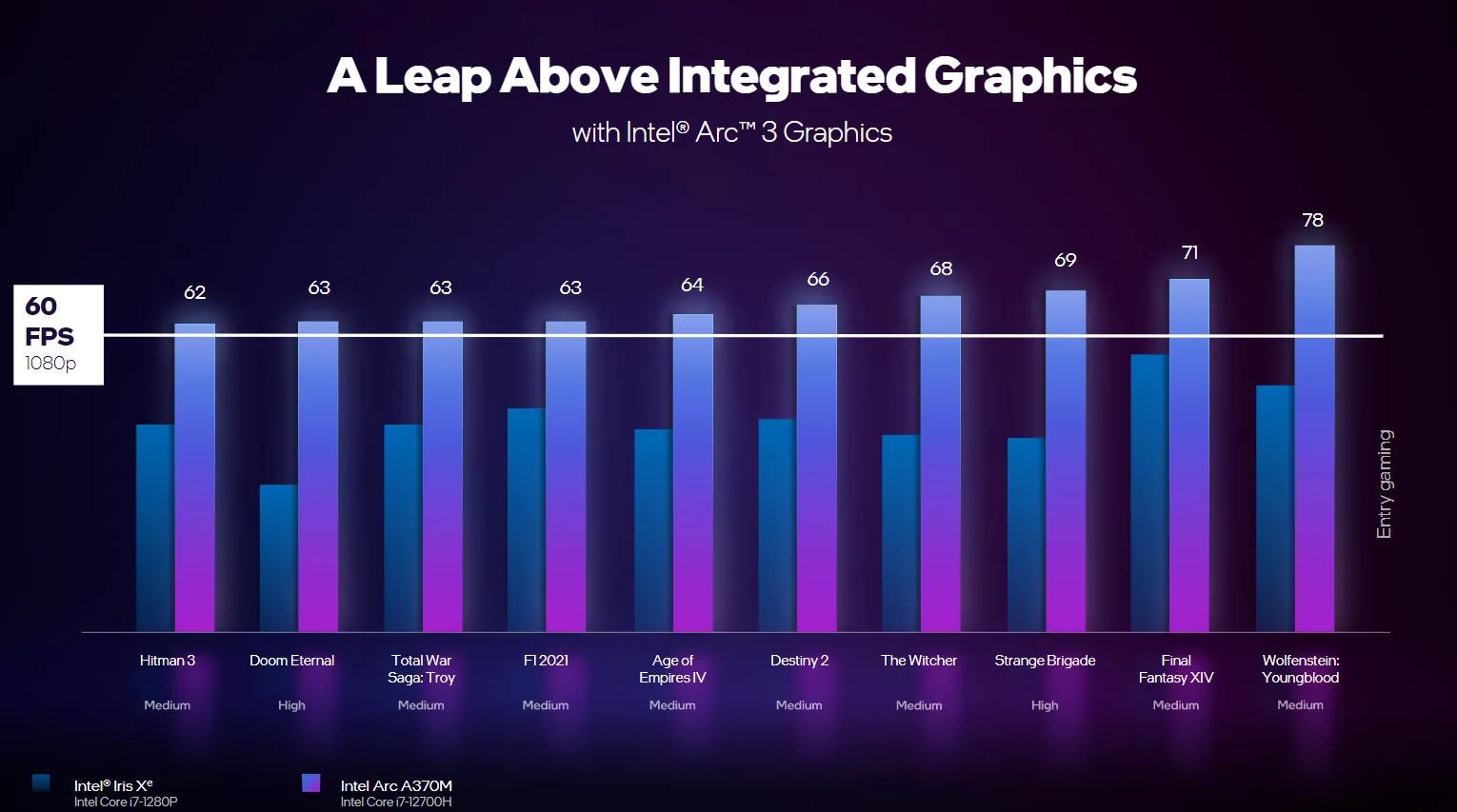
Intel is building its portfolio of graphics cards from the bottom up, starting with an entry-level card for ultra-thin laptops before the release of high-performance GPUs later this year.
The “display engine” in these Arc graphics supports HDMI 2.0b, not the latest HDMI 2.1 standard. We’ve asked Intel to explain the omission and will update this article if we hear back. Still, you can achieve up to two 8K HDR streams at 60 fps, four 4K HDR streams at 120Hz, or 1080p and 1440p at 360Hz through DisplayPort 1.4.
Intel is hoping to entice the non-gaming crowd with support for a wide range of video codecs, including VP9, AVC, HEVC, and AV1—the most significant addition. Intel claims these chips are the first to offer AV1 hardware-accelerated encoding and decoding.
Intel says Arc 3 laptops are available starting today beginning with the Samsung Galaxy Book2 Pro. Gamers and content creators eager to see how Intel competes more directly with Nvidia and AMD will find out in early summer when Arc 5 and Arc 7 are released.
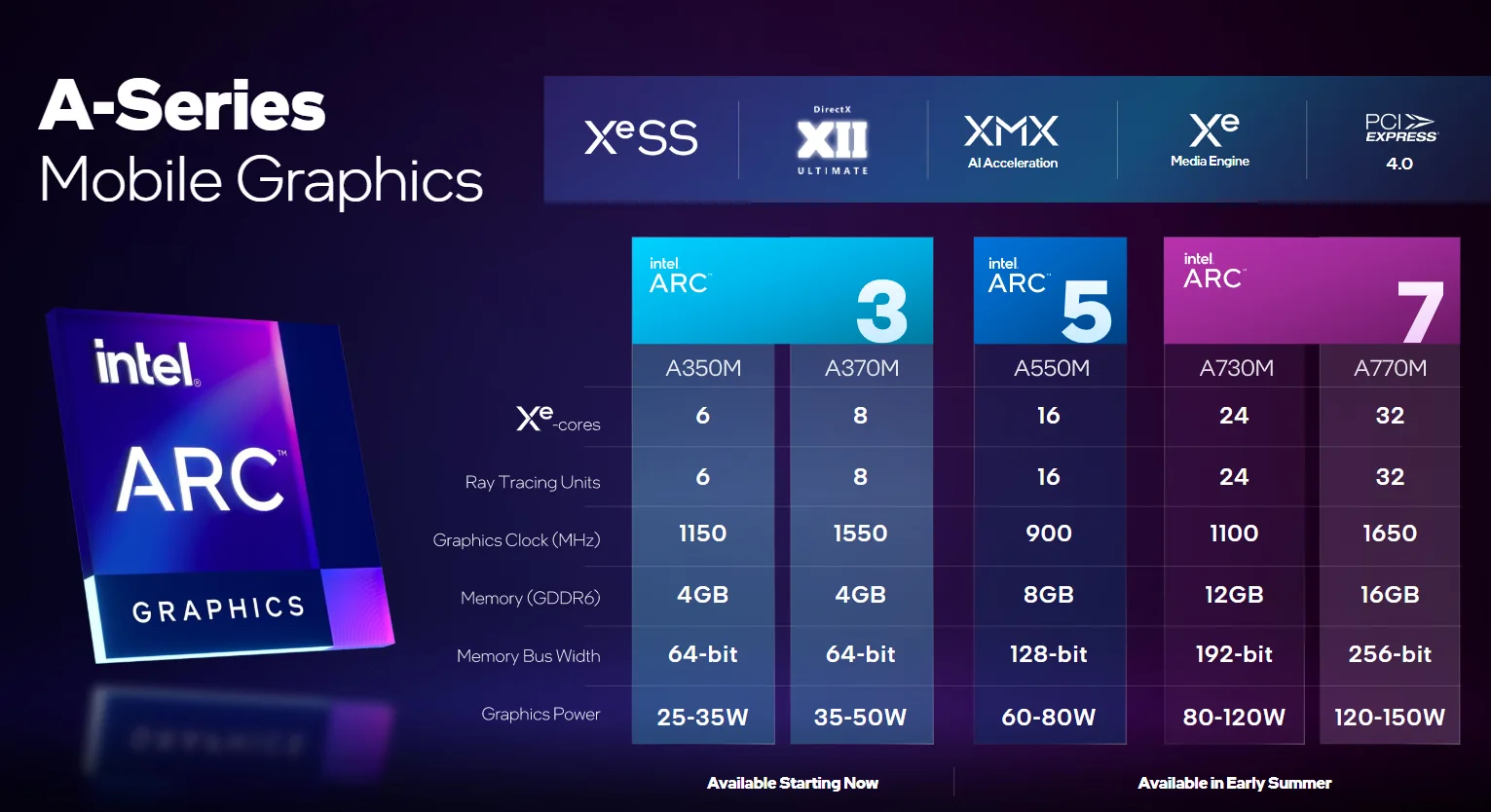
Intel® Arc™ graphics products built on gaming-first Codename Alchemist SoCs will be available in desktops, add-in-cards, and notebook form factors from global partners in 2022.

